
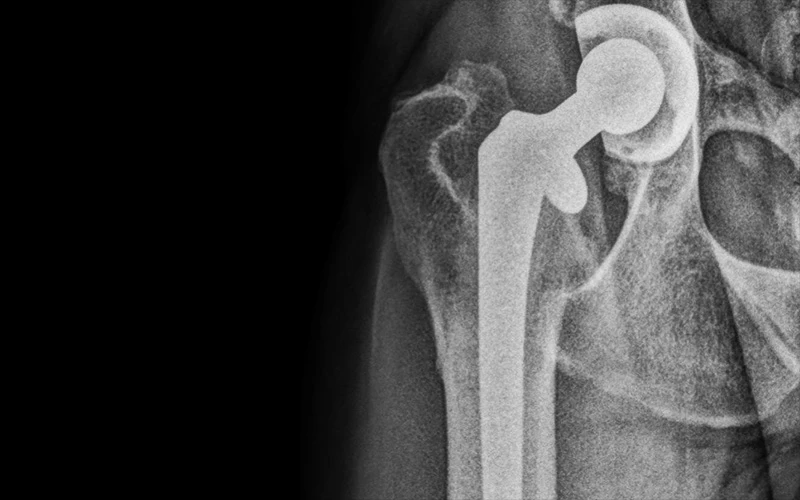
Total Hip Replacement
Advances in artificial hip technology have revolutionised the treatment of hip disease and injury in animals. Total hip replacement (THR) is now a viable option for dogs and cats with painful hip conditions. It’s the only treatment that offers lifelong relief from chronic pain and immobility.
I’m one of the few veterinary orthopaedic surgeons with specialist training to perform this highly advanced surgery. I have completed the highest levels of training and I am a board certified specialist by both the American and European Colleges of Veterinary Surgery. According to the manufacturer, I am one of the leaders in numbers of THR’s being performed in the world.
At my state-of-the-art veterinary hospital, I’m supported by a team of skilled surgeons and nurses who help me perform this complex procedure with the utmost precision and care. We achieve excellent results, helping your pet regain full mobility and a life free of pain.
What is Total Hip Replacement?
Hip joints are made up of two parts:
- The acetabulum which is cup-shaped like socket that sits on the pelvis.
- The femoral head which is a ball-shaped part that rests in the acetabulum.
Why do animals need THR?
Animals who need THR typically suffer from hip disease or injury that causes arthritis, chronic pain and limited mobility.
Common causes of hip disease and injury in animals include:
- hip dysplasia – a condition in which the acetabulum (socket) and femoral head (ball) don’t fit or develop properly, causing arthritis
- injuries such as a fracture and dislocation
- developmental disorders such as avascular necrosis where the femoral head loses blood supply causing the bone tissue to die


They present with a range of symptoms including:
- lameness – an abnormal way of walking in the rear legs, such as favouring one leg over the other
- difficulty or stiffness getting up after lying down
- trouble performing everyday activities like jumping or climbing stairs
- laying down on walks
- ‘lazy’ or ‘inactive’ puppy
How do I know if THR is right for my pet?
THR is a great solution for patients that are experiencing, or will experience osteoarthritis of the hip joints.
At my clinic, I conduct a thorough exam to determine if your pet qualifies for this type of surgery.
Factors I consider include:
- age and medical history of your pet
- severity and duration of pain or mobility issues
- overall health and fitness levels
- overall quality of life for your pet
An advanced hip replacement system that delivers unparalleled results
At my veterinary hospital, I use the BioMedtrix Total Hip Replacement System. The kit contains an acetabular component (socket), femoral component (stem) and femoral head (ball). All components are made of titanium alloy, the same material used to manufacture hip replacement joints for humans.
The system is available in two different joint stability options: cemented fixation (CFX) and biologic fixation (BFX). Cement fixation uses bone cement to attach the implant to the bone, whereas biologic fixation (BFX) is inserted into the acetabulum (socket) until a press-fit is achieved.
The CFX and BFX components are interchangeable, allowing for cement, press-fit or hybrid fixation to meet your pet’s specific needs.

Everything you need to know about total hip replacement
The biggest benefit of THR is the improved quality of life for your pet as pain in the hip is eliminated. THR returns hip function to normal and is the treatment of choice in all breeds of dogs and cats.
There are two other surgeries in dogs with hip disorders: femoral head ostectomy (FHO) and double/triple pelvic osteotomy (DPO/TPO).
FHO is a surgery where the femoral head (ball) and neck of the femur (thigh bone) are taken out, leaving the acetabulum (socket) empty. Over time, a ‘false joint’ made up of scar tissue builds around the acetabulum and provides cushioning. FHO sometimes resolves pain but doesn’t restore normal hip movement and is less predictable. It’s usually our plan “B” option as it is a ‘salvage’ procedure.
DPO/TPO is a surgical procedure where the pelvic bone is cut in two or three places. This allows the acetabulum (socket) to be rotated to better cover the femoral head (ball) which decreases looseness in the hip. This operation is used to treat dogs who are under 10 months old and have milder hip dysplasia.
Hip replacements generally don’t wear out because dogs weigh less than people and distribute weight onto four legs rather than two. Consequently, THR devices last at least 15-25 years, which is beyond the life expectancy of pets. Unless a problem arises, the implant should not need replacement.
In large breeds, our success rates are around 98%, while in small dogs/cats it is greater than 90%. Overall, animal hip replacement can improve quality of life because of its success in providing pain relief through correct alignment of certain muscles that attach near or around joint implant sites.
We space the surgeries by a variable time period apart depending on the owner/patient factors. In some cases, it is as short as 4 weeks apart, while in others it may be 6-12 months. A large proportion of dogs do well with only one hip replacement by shifting their weight onto the THR side. Many people return for the second side once they see how well their dog functions after THR.
